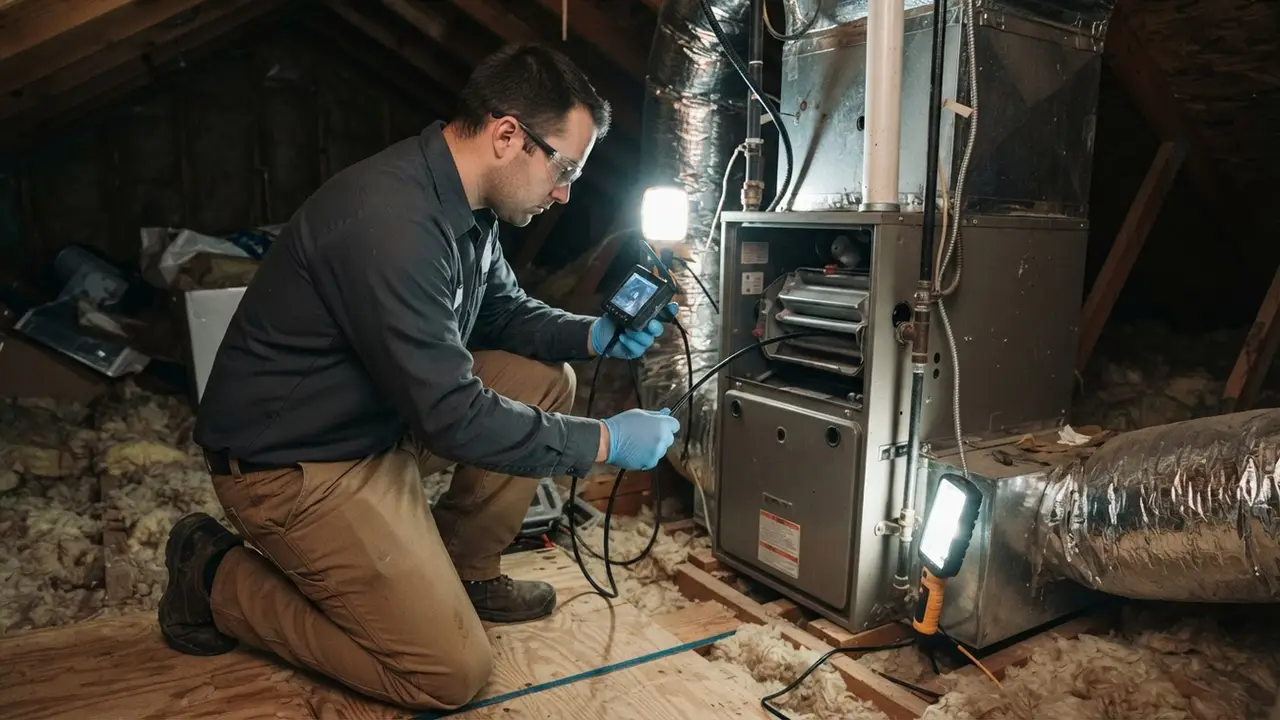
Full Fault Diagnosis
We test power, thermostat signal, filter and airflow, then the ignition or heating system and safety controls, until we find the exact fault. You get a clear answer about what failed and why.
A furnace repair visit covers diagnosis, the repair itself and a full test of the result. Here is what that looks like on a typical call, so you know what to expect when we arrive.
We test power, thermostat signal, filter and airflow, then the ignition or heating system and safety controls, until we find the exact fault. You get a clear answer about what failed and why.
We clean, adjust or replace the failed part, whether that is a flame sensor, ignitor, blower capacitor, limit switch or control component, and confirm the fix works before moving on.
While we are working, we look at burner flames, the flue connection and safety switches on a gas furnace, or the element circuits on an electric furnace, so no obvious safety problem is left behind.
We run the furnace through a complete cycle and check airflow at the registers. The job is done when the furnace starts, holds its heat and shuts down properly on its own.
Furnace Repair in York is the diagnosis and fix of a failed part or control in the gas or electric furnace that heats your home. A furnace is a chain of parts: thermostat, control board, ignition or heating elements, blower, and safety switches. When one link fails, the whole chain stops. We test each link in order, replace what failed and run the furnace through a full heating cycle to confirm the repair holds.
York sits in south-central Pennsylvania, where heating season runs from fall into spring and the furnace works hard. Many homes across York County rely on long-running furnaces, and a furnace that fails in November has months of cold ahead of it. If you are searching for furnace repair near me because the house is getting cold, the sooner the fault is found, the less strain it puts on the rest of the system.
Every furnace repair we do follows the same five steps. The order matters, because it finds the fault faster and keeps us from replacing parts that are not broken.
Schedule
Call or book online — a real human picks up and confirms a 2-hour arrival window.
Diagnose
Licensed tech inspects on-site, then walks you through the cause and your options.
Fix
The job is completed to code and done right the first time — no shortcuts, no surprises.
Guarantee
Every job backed by a written workmanship warranty — and we stand behind it.
Digital multimeter
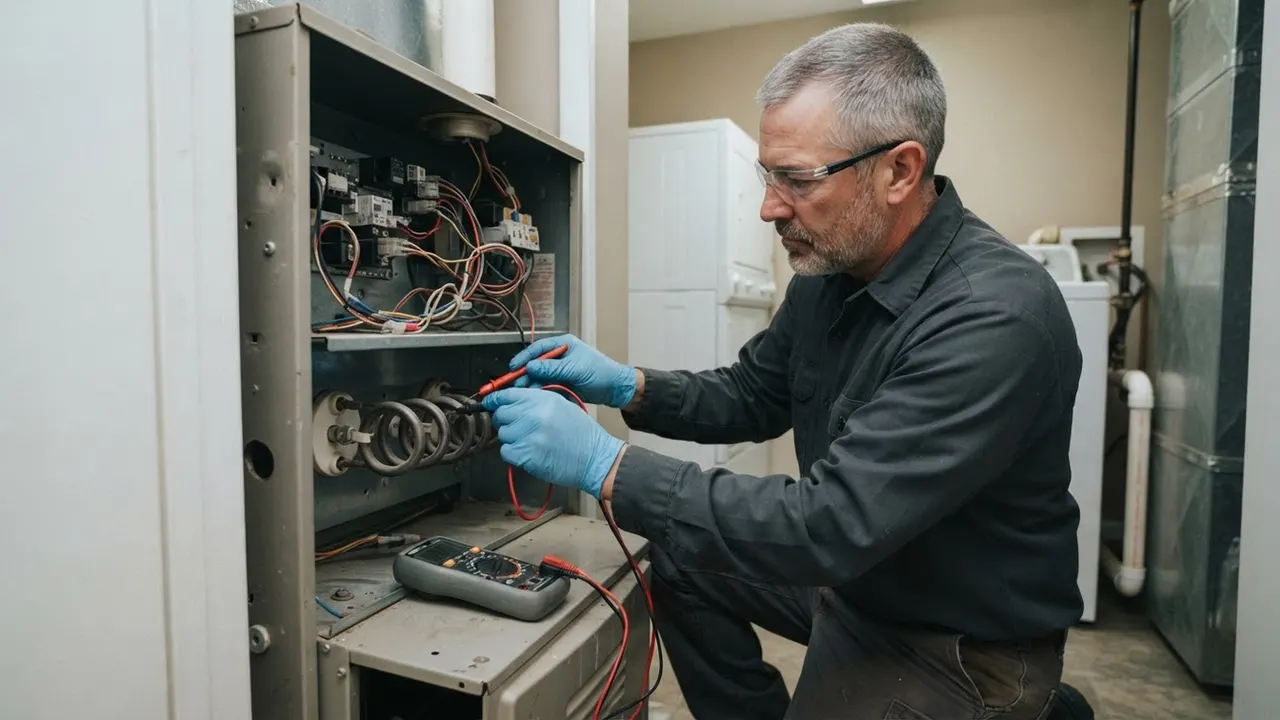
Tests voltage, continuity and resistance in switches, ignitors, motors, capacitors and heating elements to confirm which component has failed.
Combustion and gas pressure testing
On gas furnaces, checks burner operation and gas supply conditions so the flame, fuel and venting are working the way they should.
Manometer for pressure switches
Measures draft and pressure switch operation, a common cause when a gas furnace's inducer runs but the burners never light.
Temperature measurement
Checks air temperature coming off the furnace and returning to it, which shows whether the furnace is heating and moving air properly.
Capacitor tester
Checks the capacitor that helps start a blower motor, a frequent cause of a blower that hums but does not spin.
Fixed-order diagnosis
We test power, thermostat, filter and airflow first, then ignition, flame sensing and safety switches, or elements and relays on an electric furnace. A fixed order prevents guessing and replaced parts that were fine.
Component-level testing
Rather than swapping parts, we test each suspected component with a meter or gauge, so only parts that have actually failed are replaced.
Full-cycle verification
After repair, we run the furnace through a complete heating cycle and confirm lighting, flame stability, airflow and shutdown all behave correctly.
01
What we do: We diagnose from the thermostat and power supply through the ignition or heating system until the failed part is found. We repair it and test a full cycle before leaving.
→ The furnace is heating again and you know exactly what failed, instead of guessing in a cold house.
02
What we do: We check the filter, airflow and thermostat settings, then the burners, flame sensor and limit switch to find why the heat is not reaching the vents.
→ Warm air returns to every room and the furnace stops running endlessly without heating.
03
What we do: We trace the shutdown to airflow, a sensor or a control fault, repair the cause and watch the furnace through several complete cycles.
→ The furnace holds its heat through a full cycle and the house stays at a steady temperature.
York County has cold winters and a long heating season, which means a furnace here runs for a large part of the year. A fault that would be a minor annoyance in a mild climate becomes urgent when overnight temperatures drop. Many homes across York and the surrounding communities have furnaces that have been running for a long time, so wear-related faults like worn ignitors, tired blower motors and dirty sensors are common. We serve York and nearby areas, and Heater Repair in York calls often come on the first hard cold snap of the season, when furnaces that sat unused all summer are asked to start up again. If you are searching for furnace repair near me, calling early in the season, before a fault leaves you with no heat at all, usually means a simpler repair.
York
The city of York is our home base, and many calls come from homes with long-running furnaces that have been through many heating seasons.
Springettsbury Township
Homes in Springettsbury Township, next to York, call us for the same furnace faults, from no heat to short cycling.
West York Borough
West York Borough households reach us for gas and electric furnace repair, often when the first cold snap exposes a worn part.
Long, cold heating season in south-central Pennsylvania
Furnaces run for months with little rest, so wear on ignitors, blower motors and sensors adds up and faults tend to appear in the coldest weeks.
First start-up after months of sitting idle
A furnace unused all summer can reveal a dirty sensor, a clogged filter or a worn part the first time it is asked to heat, often on the first cold night.
Most York furnace calls fall into a short list of faults. Here are the ones we see most, what happens if they are ignored and how we fix them.
Problem
The furnace keeps working without heating the house, which wastes fuel and strains parts that are already struggling.
Our Fix
We check airflow first, then ignition, burners and the limit switch. Weak heat usually traces to a clogged filter, a dirty flame sensor or a blower problem, and we correct the cause.
Problem
A completely dead furnace leaves the house with no heat, and the cold gets worse every hour on a freezing night.
Our Fix
We work backward from the power supply to the thermostat, door switch and control board to find what stopped it. Most dead furnaces trace to a breaker, a switch or a control fault.
Problem
Constant starts and stops wear out ignitors and blower motors faster and keep the house from holding a steady temperature.
Our Fix
We find whether restricted airflow, a bad sensor or a control fault is causing the cycling, repair that cause and watch several full cycles to confirm it holds.
Problem
Noise often means a part is wearing out. Ignoring it can turn a small repair into a failed motor or ignition problem.
Our Fix
We find the source, repair it and check the burners and blower. A dusty smell on the first heat of the season can be normal, but a strong or lasting smell gets inspected.
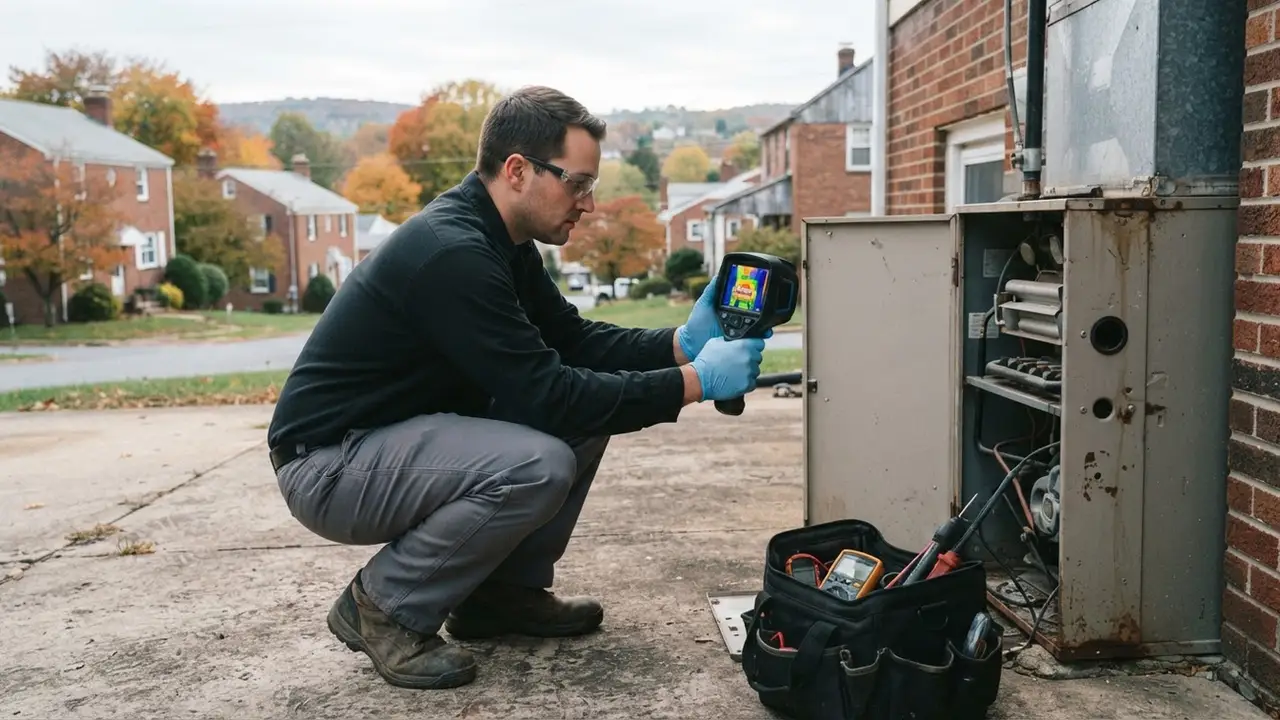
A good furnace repair does more than restart the heat. It finds why the furnace failed, fixes that cause and leaves the system running the way it should. Here is what changes for you after we leave.
Heat That Stays On
We repair the actual fault, then run the furnace through a full heating cycle and watch it light, hold its flame, move air and shut down. A repair that only works for a minute is not finished, so we confirm the furnace runs properly before leaving your home.
A Clear Explanation
You get plain words about what failed: an ignitor, a flame sensor, a blower motor, a limit switch or a control board. Knowing the cause helps you decide whether repair makes sense or whether an older furnace is becoming a repeat problem.
Fewer Repeat Breakdowns
Many furnace failures start small, like a dirty flame sensor or a clogged filter, and grow into bigger faults. Fixing the cause instead of the symptom keeps the same problem from coming back in a few weeks.
Safer Operation
A furnace that lights badly or vents poorly is a safety concern, not just a comfort one. We check burners, flue connection and safety controls while we are working so the heat you get back is heat your home can use safely.
Furnace repair cost depends on what failed, not on the furnace alone. A cleaned flame sensor and a replaced blower motor are very different repairs. We diagnose first so the price fits the real fault, and we tell you honestly if a repair does not make sense for an older furnace.
What changes the price
Which part failed
Small parts like sensors and capacitors cost far less to fix than a blower motor, control board or heat exchanger. The failed part is the biggest driver of the final cost.
Furnace age
An older furnace may need parts that are harder to find, and a furnace that keeps failing can reach the point where repair is no longer worth it compared with replacement.
Gas or electric
Gas and electric furnaces fail in different places. Gas furnaces add ignition and venting faults, while electric furnaces concentrate faults in elements and relays.
Time of the call
A furnace that fails on a freezing night is urgent, and urgency can change how a call is scheduled. Catching problems early in the season often means a simpler repair.
Furnace Repair York Pros works on furnaces and heaters and nothing else, so the same faults come across our work again and again. That repetition builds fast, accurate diagnosis. We know how a gas furnace should sequence, how an electric furnace should draw power and where each one tends to fail.
Real answers to the questions we hear most often from local homeowners and property managers.
Gas furnaces add ignition, burners, a flame sensor and venting to the repair picture. If your York furnace burns gas, this page covers the faults specific to that sequence and how we test each stage.
View Gas Furnace RepairElectric furnaces heat with resistance elements instead of burners, so faults trace to elements, sequencers, relays and breakers. If your furnace runs on electricity, this is the page that fits.
View Electric Furnace RepairWhen the furnace runs but the house stays cold, the fault is usually airflow, ignition or a limit switch. This page walks through the most likely causes in the order we test them.
View Furnace Not HeatingA furnace that starts, runs briefly and shuts off repeatedly is short cycling. It wears parts out and wastes fuel, and this page explains the common causes and the fix.
View Furnace Short CyclingMany repair calls start as small problems that a seasonal check would have caught. A tune-up inspects the ignition, burners, blower and safety controls before they fail.
View Furnace Inspection and Tune-UpCall (717) 276-7978 to talk about your furnace. Tell us whether it is gas or electric and what you notice: no heat, cold air, noise or constant restarts. We serve York and nearby communities in York County, Pennsylvania.
Phone
(717) 276-7978Address
York, PA
Hours
Mon–Fri: 7AM – 7PM
Sat: 8AM – 4PM
Sun: Emergency Only
24/7 Emergency Available